How to Dry Cashmere Properly (Without Shrinking or Damage)
Learn the correct way to dry cashmere without shrinking, stretching, or damaging it. Step-by-step guide, drying tips, mistakes to avoid, and expert care advice.
How to Dry Cashmere Without Ruining It
Most cashmere gets damaged not in the wash but during drying. The wrong method can shrink a sweater, stretch it out of shape, or leave permanent creases. This guide covers exactly what to do after hand washing or machine washing so your cashmere comes out looking as good as it went in.
Press out water gently between two towels, reshape the garment while it is still damp, then lay it flat on a dry surface away from heat and sunlight. Never wring, never hang, never tumble dry.
The right way to dry cashmere
Follow these steps in order every time you wash cashmere.
Drying rules that matter most
- Remove from water gently and support the full garment with both hands.
- Press between two dry towels before reshaping.
- Lay flat on a clean dry surface or mesh rack.
- Leave it to dry naturally away from heat and sunlight.
1. Remove from water gently
Lift the garment out of the water supporting it from underneath with both hands. Do not pull it by one end. Wet cashmere is heavy and fragile, and pulling it from a single point will stretch the fibres permanently.
2. Gently squeeze out excess water
Hold the garment against the side of the basin or sink and press it gently to remove most of the water. Do not wring, twist, or scrunch the fabric. A slow, even squeeze from top to bottom is all you need.
Never wring cashmere. Even one twist can permanently distort the weave structure.
3. Press between two dry towels
Lay a clean dry towel flat on a surface. Place the cashmere on top of it, then lay another towel over the garment. Press down firmly across the entire surface to absorb as much remaining water as possible. You can roll the towel and garment together and press along the roll for better absorption.
Use a white or colourfast towel. A damp coloured towel pressed against wet cashmere can transfer dye — this is especially worth noting if you have just used a specialist cashmere detergent for the first time and the garment is still releasing residual colour.
4. Reshape while still damp
This is the most important step. While the garment is still damp, gently pull and smooth it back into its original shape. Check the shoulders, sleeves, hem, and neckline. Cashmere is easiest to reshape while wet. Once it has dried in the wrong shape, it is much harder to correct.
5. Lay flat on a fresh dry towel or mesh rack
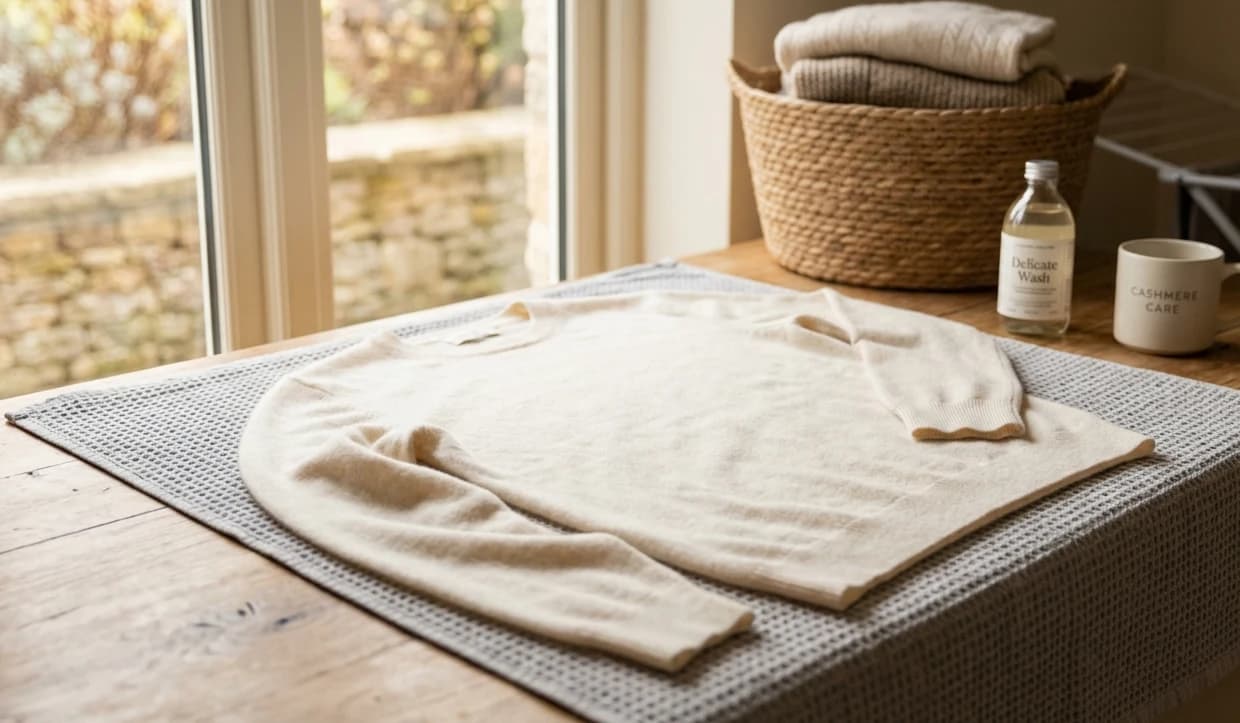
Move the garment onto a clean dry surface. A mesh drying rack is ideal because it allows air to circulate around the whole garment. A dry towel on a flat surface also works well. The garment needs to lie completely flat with no bunching or folding.
6. Leave to dry naturally
Place the garment somewhere with good air circulation, away from direct sunlight, radiators, and any other heat source. Turn it over halfway through drying if it is on a flat surface so both sides dry evenly. Depending on the thickness of the knit and the humidity in the room, most cashmere takes between 12 and 24 hours to dry completely.
Replace the towel underneath if it becomes very damp. A wet towel underneath slows drying significantly.
Drying methods compared
Not all drying methods are equal for cashmere.
Recommended
Flat on a mesh rack
The best option. Air circulates on all sides, the garment stays in shape, and drying is even. A mesh laundry rack costs very little and works perfectly.
Flat on a towel
Works well if you replace the towel when it gets damp. Turn the garment over halfway through drying so the underside dries evenly.
Use with care
Near an open window
Good air flow helps. Fine as long as the sun is not shining directly on the garment. Direct sunlight fades colour and weakens fibres over time.
Never do this
Hanging on a hanger
The weight of the wet fabric pulls the shoulders and body out of shape. Even one drying session hanging can permanently distort a cashmere sweater.
Tumble dryer
Even a low heat setting will shrink cashmere. The heat causes the fibres to felt together irreversibly. One cycle in the dryer can reduce a sweater by several sizes.
On a radiator or heater
Direct heat shrinks and stiffens cashmere. It also dries the fabric unevenly, which can cause it to dry in a distorted position.
How long does cashmere take to dry?
Drying time depends on the thickness of the knit, the humidity in your home, and how much air circulation there is. As a rough guide:
| Knit type | Approximate drying time |
|---|---|
| Lightweight 1-ply | 8 to 12 hours |
| Standard 2-ply sweater | 12 to 18 hours |
| Thick 4-ply or chunky knit | 18 to 28 hours |
| Scarf or wrap | 6 to 10 hours |
Always check the garment is completely dry before folding and storing it. Putting damp cashmere away encourages mildew and unpleasant odours. If the fabric feels even slightly cool to the touch, it still contains moisture.
Quick reference
Everything you need at a glance.
At a glance
- Reshape while the garment is still damp
- Lay flat on a clean dry surface
- Turn the garment over halfway through drying
- Check it is fully dry before storing
Always do this
- Reshape while the garment is still damp
- Lay flat on a clean dry surface
- Press between towels to remove water first
- Turn the garment over halfway through drying
- Check it is fully dry before storing
- Use good air circulation
Never do this
- Hang on a hanger to dry
- Put in the tumble dryer
- Dry on or near a radiator
- Wring or twist the fabric
- Leave in direct sunlight
- Store before fully dry
The most common drying mistakes
These are the errors that cause the most irreversible damage.
1. Hanging the garment to dry
This is the single most common mistake. Wet cashmere is very heavy relative to its size, and gravity pulls the shoulders and body downward as it dries. The damage can be permanent. Always lay flat.
2. Using the tumble dryer on a low setting
There is no safe tumble dryer setting for cashmere. Even a low or delicate cycle generates enough heat and mechanical movement to felt the fibres. This is irreversible. If your cashmere has already shrunk from the dryer, try the conditioner soak and gentle re-stretching method covered in the guide to unshrinking cashmere — it works best when shrinkage is caught early, before the fibres have fully felted.
3. Drying over a radiator or heater
Concentrated heat from below causes cashmere to dry from one side much faster than the other, which creates permanent creases and can distort the weave. It also accelerates fibre breakdown over time.
4. Not reshaping before leaving to dry
If you lay cashmere flat without reshaping it first, it will dry in whatever shape it happens to be in. Take two minutes to smooth the garment into its correct dimensions while it is still damp. This is the only point at which it is easy to correct.
5. Leaving in the sun to dry faster
Sunlight does speed up drying, but it also fades the colour of the fabric and weakens the fibres with UV exposure over time. Dry indoors or in a shaded outdoor space with good air movement instead. The same applies during long-term storage — light exposure is one of the less obvious causes of colour loss in stored cashmere.
What to do if cashmere dried in the wrong shape
If your cashmere has dried stretched, misshapen, or with creases, try this before assuming it is ruined.
Recovery steps
- Dampen the garment lightly and evenly with cool water
- Gently pull and smooth it back into the correct shape while damp
- Lay it flat again to dry properly
- Use a garment steamer lightly for creases, not a hot iron
Dampen the garment lightly and evenly with cool water using a spray bottle or a damp cloth. The fibres will relax slightly when they absorb moisture again. While the garment is damp, gently pull and smooth it back into the correct shape. Then lay it flat again to dry properly.
This works best when done quickly after noticing the problem. A garment that has been stored in a distorted shape for weeks is harder to correct than one that dried wrong earlier that day.
For creases, a light steam from a garment steamer held a few centimetres away from the fabric can help. Never press the iron directly onto cashmere and never use a hot iron.
If the problem is shrinkage rather than shape distortion, the full method including a conditioner soak that relaxes the fibres before stretching is covered step by step in the cashmere unshrinking guide.
Frequently asked questions
Can you speed up cashmere drying time?
Yes, but carefully. Good air circulation is the safest way to speed things up. A fan placed near the drying garment, not blowing directly onto it at full power, can reduce drying time significantly. Opening a window in a warm room also helps. Avoid using heat to speed up the process.
Can cashmere go in the dryer on a no-heat or air-only setting?
Most tumble dryers still produce some warmth even on an air-only or no-heat setting, and the mechanical tumbling action itself can cause felting and pilling in cashmere. It is not worth the risk. Flat drying takes longer but it is the only method that consistently preserves the garment. If pilling is already appearing on your cashmere — whether from drying or from normal friction during wear — the cashmere pilling removal guide covers how to remove it cleanly without damaging the surface.
How do you know when cashmere is completely dry?
Press your hand firmly onto the thickest part of the garment, usually the body or a doubled seam area. If the fabric feels cool to the touch, it still contains moisture. Fully dry cashmere feels room temperature, not cool. Only once you are confident it is dry should you fold and put it away. Also check underneath the garment if it has been lying on a towel.
My cashmere shrunk in the dryer. Can it be fixed?
Sometimes, but not always. Soak the garment in cool water with a small amount of hair conditioner or fabric conditioner for 20 to 30 minutes. The conditioner relaxes the fibres slightly. Then gently stretch the garment back to its original dimensions while it is wet and lay it flat to dry. This can recover some size, but heavily felted cashmere may not respond fully. The complete step-by-step method — including how many times you can safely repeat it and what to check before you start — is in the cashmere unshrinking guide.
Can you dry cashmere outside?
Yes, as long as it is in the shade. A shaded outdoor spot with good air circulation dries cashmere well and quickly. Avoid direct sunlight, which can fade the colour and break down the fibres over time. Also bring the garment inside before evening if there is any chance of dew or dampness overnight.
Does cashmere need to be reshaped every time it is washed?
Yes. Reshaping while damp is always a good habit, even if the garment looks roughly right. It only takes a minute or two and it ensures the garment retains its original dimensions over many washes. Skipping this step occasionally is fine, but making it a habit keeps cashmere looking its best for much longer.
Can you iron cashmere?
Avoid ironing cashmere directly. The heat and pressure of an iron can flatten and glaze the fibres, permanently changing the texture. A garment steamer is a much better option. Hold it a few centimetres away from the fabric and use a gentle sweeping motion. If you must iron, use the lowest possible setting and place a clean damp cloth between the iron and the cashmere.
What is the best surface to dry cashmere on?
A mesh drying rack is the best option because it allows air to circulate underneath the garment as well as above it, which shortens drying time and produces a more even result. A clean dry towel on a flat surface works well too. Avoid drying directly on a wooden surface without a towel underneath, as the moisture can damage the surface and the garment may pick up a wood or varnish smell.
The bottom line
Drying cashmere correctly is simpler than most people think. Squeeze gently, press between towels, reshape while damp, lay flat, and leave it alone. Those five steps protect your cashmere from the most common forms of drying damage.
The mistakes that cause permanent damage, the dryer, the radiator, the hanger, are all easy to avoid once you know what they do to the fibres. A few extra hours of flat drying is a small price to pay for a sweater that holds its shape and softness for years. Once it is dry, the next step is storing it correctly — because damp storage or hanging during off-season is where many well-washed, well-dried garments get damaged next.