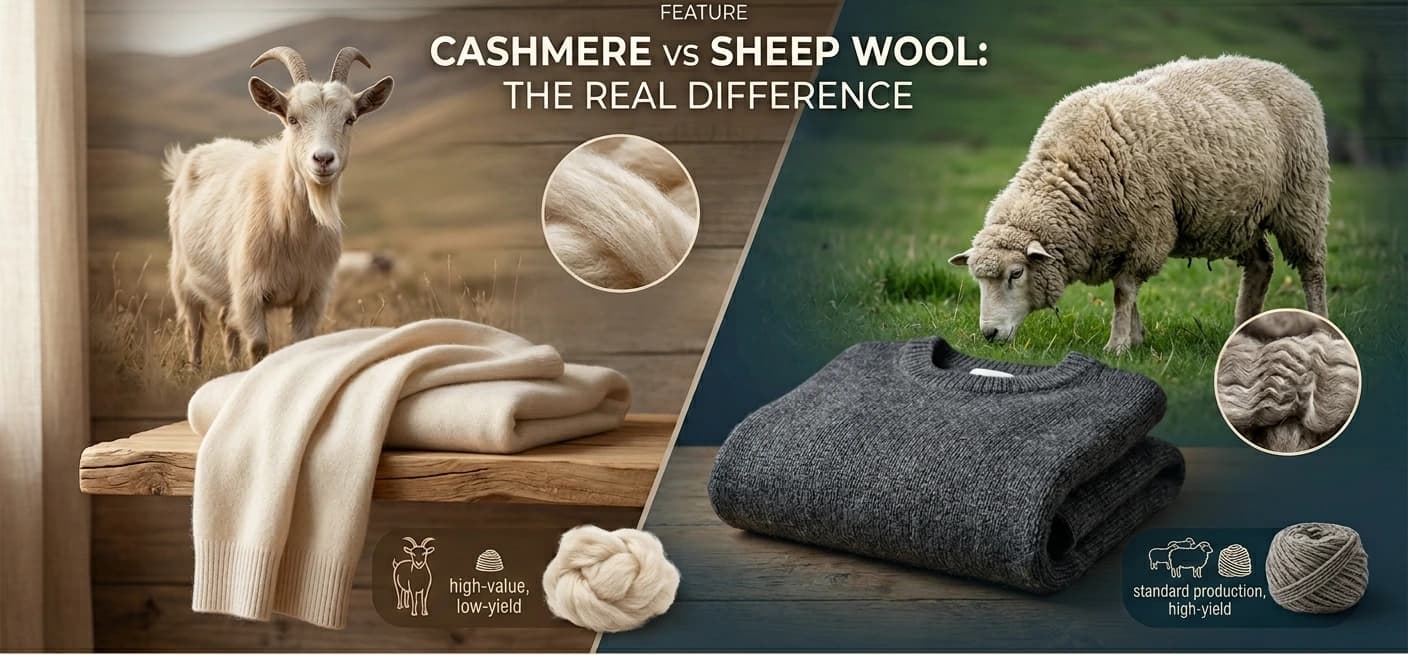
Cashmere vs Sheep Wool: What Is the Real Difference?
Cashmere and sheep wool both feel warm and look similar on the hanger but they are very different fibres. Compare softness, warmth, durability, care, and price to find out which one is right for you.
Cashmere vs Sheep Wool: What Is the Real Difference?
If you have ever stood in a shop holding two sweaters and wondered whether cashmere is actually worth the extra money over a wool one, you are not alone. Both fibres feel warm and look similar on the hanger, but they are very different in terms of where they come from, how they feel, how long they last, and how much they cost.
- From cashmere goats in Mongolia and Asia
- Exceptionally soft, suitable for sensitive skin
- Lightweight with superior warmth to weight ratio
- Requires careful hand washing and flat drying
- Higher price, excellent long-term value when cared for
- From sheep farmed worldwide
- Varies from coarse to very fine depending on breed
- More robust and resilient to everyday wear
- More forgiving to wash, some styles machine washable
- Lower price point, consistent quality across ranges
Where they come from
Sheep wool comes from sheep. Farmers shear sheep once or twice a year and the fleece is collected, cleaned, and processed into yarn. Because sheep produce a large amount of wool each year and are farmed all over the world, the supply is plentiful. This is one of the main reasons wool is affordable.
Cashmere comes from cashmere goats, primarily in Mongolia, China, Afghanistan, and parts of Iran. Unlike sheep, a single cashmere goat produces only around 100 to 200 grams of usable fibre each year. That fibre is collected by combing the goat during the spring moulting season, not by shearing.
How they feel
This is probably the first thing most people notice when they hold the two fibres side by side.
The individual fibres are finer, which means the fabric sits close to skin without causing irritation. High quality cashmere feels almost weightless and has a natural loft that is hard to replicate.
Coarser wools can feel scratchy against bare skin. Fine Merino is much softer and can be worn directly on skin, though it generally does not match the softness of good cashmere.
Warmth and insulation
Both fibres are excellent insulators but they work slightly differently. Cashmere fibres are hollow, which traps warm air very efficiently. Wool can absorb up to 30 percent of its weight in moisture without feeling wet, which makes it better in unpredictable wet weather.
Cashmere is often described as around eight times warmer than sheep wool by weight. A thin cashmere sweater can provide as much warmth as a much thicker wool one.
Durability and longevity
Wool is generally more durable than cashmere and more forgiving in terms of care. Sheep wool fibres have a natural crimp that gives them elasticity and helps them bounce back well after compression. Wool is also more resistant to pilling than lower quality cashmere.
Cashmere is a more delicate fibre and requires careful washing and storage. However, high quality cashmere that is well cared for can last for decades and actually improves with age as the fibres settle and become even softer. The key variable is quality. Cheap cashmere pills quickly and loses its softness within a season. Good quality wool is more consistent across price points.
How to care for each
This is one area where sheep wool has a practical advantage over cashmere day to day.
Price and value
There is a significant price difference between cashmere and sheep wool, and it is entirely justified by the production factors above. The value calculation with cashmere depends on how you care for it. A well-made cashmere sweater looked after properly should outlast multiple wool sweaters and improve with age.
When you factor in cost per wear over many years, quality cashmere is often better value than it appears at first glance.
Sustainability
Both fibres are natural and biodegradable, which gives them an environmental advantage over synthetic alternatives. But both also come with their own sustainability concerns.
Sheep wool production has a well-established farming infrastructure and is generally considered one of the more sustainable natural fibres when produced responsibly. Cashmere sustainability is more complex. The demand for cheap cashmere has led to overgrazing in parts of Mongolia and China, contributing to significant land degradation in producing regions.
If sustainability is a priority, look for certified ethical and sustainable sourcing from whichever brand you choose, whether wool or cashmere.
Side by side summary
Which one should you choose?
The two fibres are not in competition with each other. Most people who love knitwear end up with both in their wardrobe, using each for what it does best.
- Softness and warmth against skin matters most to you
- You want a lightweight piece you can layer easily
- You are investing in something to keep for many years
- You are willing to give it proper care and attention
- You want something more hardwearing and low maintenance
- You need outdoor or rugged everyday wear
- Budget is a key consideration for your purchase
- You prefer the weight and substance of a traditional knit
Frequently asked questions
Is cashmere warmer than wool?
Yes, cashmere is generally warmer by weight. The hollow fibre structure traps heat efficiently, which means a thin cashmere piece provides more warmth than a comparable wool knit of the same thickness. However, thicker wool garments can match or exceed the warmth of a lighter cashmere piece simply through volume.
Is cashmere better than wool?
It depends on what you need from a garment. Cashmere is softer and lighter, but wool is more durable and easier to care for. Neither is universally better. They serve different purposes well and most people find both earn a place in their wardrobe.
Can you tell cashmere and wool apart by touch?
Usually yes. Cashmere feels noticeably softer and lighter than most sheep wool. It has a distinctive loftiness to it. However, fine Merino wool can feel similar to lower grade cashmere, so touch alone is not always a reliable test when comparing quality levels.
Why is cashmere so much more expensive than wool?
Primarily because of supply. A cashmere goat produces only around 100 to 200 grams of usable fibre per year compared to several kilograms from a sheep. The fibre also requires hand combing rather than shearing and must be carefully sorted to separate the fine undercoat from the coarser outer guard hairs. All of this adds up to a significantly higher production cost.
Does cashmere pill more than wool?
Lower quality cashmere does tend to pill more than good quality wool, particularly in the first few washes. High quality cashmere with longer fibres pills much less and actually becomes smoother with age. Pilling in cashmere is largely a quality indicator rather than a property of the fibre itself.
Which is better for sensitive skin?
Cashmere is generally the better choice for sensitive skin because the finer fibres cause less irritation. Fine Merino wool is also a good option. Standard or coarser sheep wool breeds can cause itching or irritation for people with sensitive skin, especially when worn directly against the neck or wrists.
Is wool or cashmere better for the environment?
Both are natural biodegradable fibres, which gives them an advantage over synthetics. Wool from responsibly managed farms is generally considered one of the more sustainable textile options. Cashmere has more significant challenges related to overgrazing in producing regions, though responsible brands are actively working to address this. Buying from certified sustainable sources matters for both.
Can you wear cashmere and wool in the same season?
Absolutely. Many people wear cashmere as a lighter layer in autumn and spring and reach for thicker wool knits in the coldest months. They complement each other well as part of a thoughtful wardrobe.